
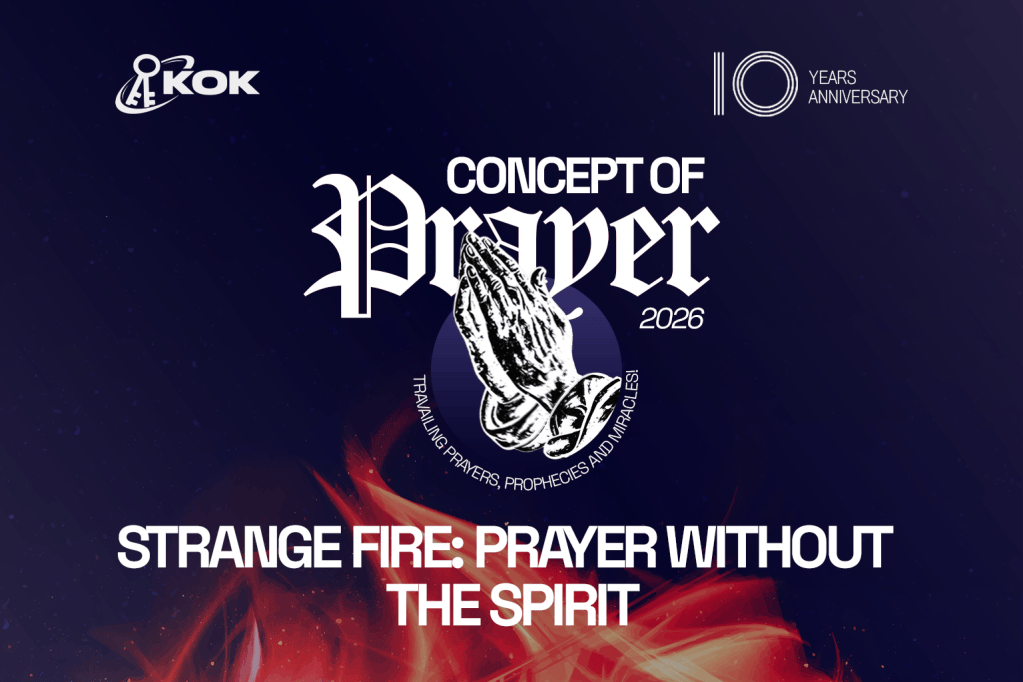
And Nadab and Abihu, the sons of Aaron, took either of them his censer, and put fire therein, and put incense thereon, and offered strange fire before the LORD, which he commanded them not.” — Leviticus 10:1
Prayer Without the Spirit
We have progressively discovered in our journey that prayer under the New Covenant is not sustained by human effort but by the ministry of the Holy Spirit. As believers, we pray in the Spirit because He is the very sphere of our communion with God. We pray with the spirit because our regenerated spirit has been made alive to Him. Furthermore, the Holy Spirit helps our infirmities, intercedes according to God’s will, and gives utterance beyond natural speech. This raises the question of whether there can be prayer that God does not receive. The story of Nadab and Abihu provides a clear precedent for this truth.
Immediately after the consecration of Aaron and his sons, and immediately after the fire of God descended from heaven upon the altar, Nadab and Abihu entered the sanctuary with censers in their hands and offered what Scripture calls “strange fire before the Lord, which He commanded them not.” Their error was not that they refused to worship. They did not abandon the priesthood, neglect the altar, or reject God’s presence. Everything about their ministry appeared legitimate. They carried censers, stood before the Lord, and burned incense. Yet one phrase exposes the entire process: “which He commanded them not.” The issue was never the offering itself but the source from which it proceeded. Only one chapter earlier, God Himself had sent fire from heaven to consume the sacrifice upon the altar. That fire was holy because it originated from God. It was to be preserved continually and never replaced by another source. Nadab and Abihu introduced a different fire into the sanctuary. Whether motivated by carelessness, presumption, or self-confidence, they attempted to minister before God with something He had not provided. It is only what proceeds from God can truly return to God.
It is entirely possible to maintain the appearance of prayer while gradually losing dependence upon the Holy Spirit. A believer may continue speaking words while his heart grows distant from God. He may preserve religious habits while neglecting communion. Prayer meetings may continue, ministries may flourish, and outward activity may increase, yet the life of the Spirit that once animated those prayers may quietly diminish. Strange fire is therefore not the absence of prayer but the substitution of the Spirit’s life with the energy of the flesh. The Lord Jesus warned of this very danger. He rebuked those who honored God with their lips while their hearts remained far from Him. Their worship retained its outward form, but communion had been lost. Likewise, James teaches that there are prayers that remain unanswered because they arise from selfish motives rather than from hearts aligned with the will of God. Scripture consistently distinguishes between prayers that originate from man’s desires and prayers that proceed from the Spirit of God.
This is precisely why Paul repeatedly commands believers to pray in the Spirit. The command is more than an encouragement to pray fervently. It is an invitation to pray according to the administration of the Holy Spirit. The Spirit is not merely present to assist our prayers after we have begun. He is the very source from which true prayer flows. He searches the deep things of God, knows the mind of the Father, and continually shapes our petitions according to heaven’s will. Even the gift of speaking in tongues finds its place here. The value of tongues is not found in the utterance itself but in the Spirit who gives it. Apart from the Holy Spirit, tongues become empty sounds. Apart from the Spirit, even the most eloquent prayer becomes nothing more than human speech ascending from human strength.
The warning of strange fire therefore extends beyond the Old Testament priesthood. It confronts every generation of believers with the same question: From where does your prayer originate? Is it born of communion or merely of routine? Does it proceed from the Spirit’s leading or from human impulse? Is the altar sustained by the fire God Himself has provided, or have we gradually substituted it with our own zeal, methods, and confidence?
God has never sought religious activity apart from relationship. He desires a people among whom He may dwell and through whom His Spirit may continually commune. The prayer that pleases God is not the longest prayer, the loudest prayer, or even the most articulate prayer. It is the prayer that proceeds from a consecrated heart, animated by the Holy Spirit, and offered according to the will of the Father.
The fire that God accepts has always been His own fire. Under the New Covenant, that fire is the abiding ministry of the Holy Spirit within the believer. As we continually yield ourselves to Him, our prayers cease to be the labor of human effort and become the living expression of divine communion. Only then does our worship rise before God as a pleasing offering, because only the fire that comes from heaven can truly ascend back to heaven.
Further Reading: Lev 9:22–24, 10:1–3; Isaiah 29:13; Matt 15:7–9; Rom 8:26–27; Gal 5:16–25; Eph 6:18; Jam 4:2–3; Heb 12:28–29.

Written by Benny Boateng

Leave a Reply